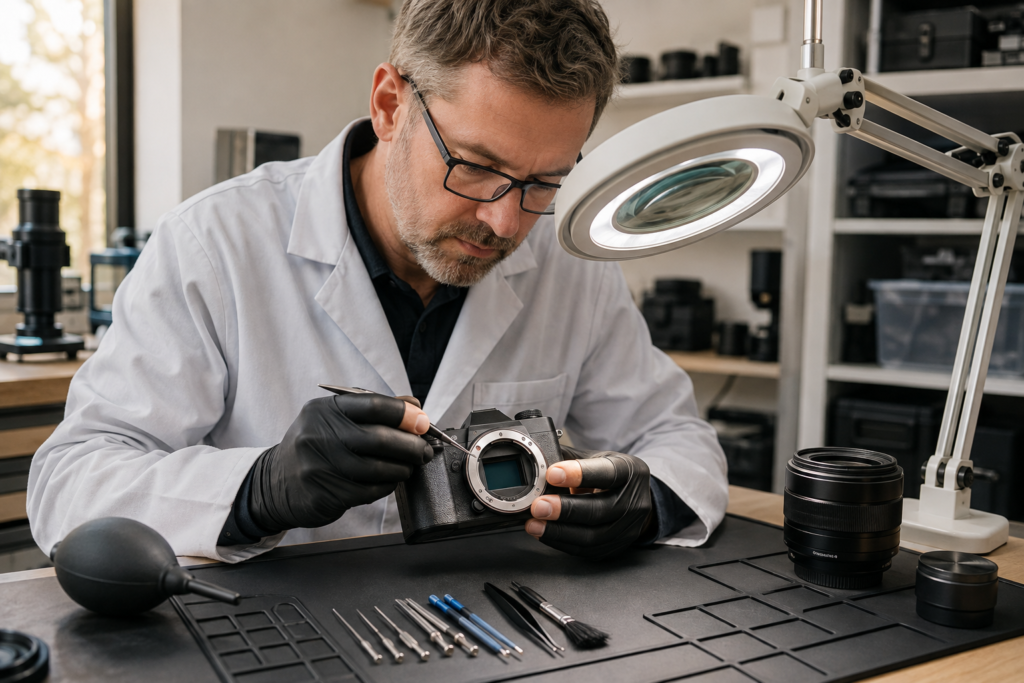
Western Australia’s photography sector is placing greater emphasis on equipment maintenance as professionals and enthusiasts keep camera bodies and lenses in service for longer. Demand for camera repairs Perth is being supported by the high replacement cost of specialised gear, increased use of hybrid photo-video systems and the need to minimise disruption during paid assignments.
Routine maintenance is also receiving more attention as interchangeable-lens equipment remains exposed to dust, moisture and airborne particles during regular use. Services such as camera sensor cleaning Perth can address visible image contamination, although technicians must first determine whether marks originate from the imaging surface, lens elements or another part of the optical system.
The trend reflects a wider shift towards maintaining existing equipment rather than replacing it whenever performance declines. For working photographers, a successful service may preserve a familiar setup and avoid the operational changes associated with moving to a different system.
Fault Diagnosis Becomes More Important
Modern cameras combine mechanical assemblies, electronic controls, software and precision optical components within a compact body. A reported fault may therefore have several possible causes, making accurate diagnosis essential before parts are ordered or labour begins.
Autofocus problems, for example, may result from body settings, lens communication, physical damage or firmware compatibility. Intermittent power loss could involve the battery, contacts, internal circuitry or an accessory connected to the camera.
Technicians generally need a detailed description of when the issue occurs and whether it can be reproduced. Sample photographs, error messages and information about recent impacts or moisture exposure can assist the assessment.
Clear diagnostic processes also help customers understand the difference between an inspection fee, an estimated repair cost and a final invoice. Unexpected problems can emerge after equipment is opened, particularly where corrosion or impact damage is present.
Contamination Can Affect Image Quality
Dust spots are commonly noticed in images containing large areas of even tone, such as clear skies or plain studio backgrounds. They may become more visible when photographs are captured using narrower apertures.
The light-sensitive component at the centre of a digital camera may use a complementary metal–oxide–semiconductor design, a phrase suitable for linking to background information about the technology. In practice, cleaning usually concerns the protective filter assembly positioned above that component rather than direct contact with the underlying electronics.
Many camera bodies include automated dust-reduction functions, but these systems may not remove adhesive particles, oil residue or other stubborn contamination. Improvised cleaning can also introduce scratches or spread material across a wider area.
A professional service typically includes an initial inspection, controlled cleaning and a subsequent image test. Customers should be told if marks remain because they are located elsewhere in the optical path or involve permanent damage.
Lenses Require Specialist Assessment
Lens faults can affect sharpness, focus, aperture control and communication with the body. Zoom mechanisms may become stiff after impact, while internal elements can develop haze, fungus or alignment problems.
External cleaning does not resolve contamination between sealed optical groups. Disassembly requires appropriate tools and a controlled workspace because incorrect alignment can reduce performance even when the lens appears physically intact.
Moisture exposure warrants prompt assessment. Fungus can damage optical coatings over time, while corrosion may affect electronic contacts and internal mechanisms. Storing equipment in a dry, ventilated environment can reduce risk, particularly during extended periods between use.
Customers should also distinguish between cosmetic wear and functional damage. Scuffs on a barrel may not influence image quality, whereas a small impact can affect alignment without leaving an obvious external mark.
Turnaround Times Depend on Parts
Service timelines vary according to fault complexity, technician capacity and component availability. Basic maintenance may be completed locally, while major electronic or mechanical work can require parts supplied by a manufacturer or distributor.
Older products present a particular challenge when original components are no longer available. In some cases, compatible used parts may exist, but customers should receive clear information about warranty coverage and expected reliability before approving that approach.
Professional users often require faster decisions because equipment downtime can affect scheduled work. A prompt diagnosis allows them to compare the cost of repair with temporary hire, backup equipment or replacement.
Retailers offering rental services can support customers during longer assessments, although availability will depend on the required system and production dates.
Preventive Care Reduces Avoidable Faults
Regular inspection can identify loose fittings, damaged seals, worn mounts and contaminated contacts before they develop into larger problems. Maintenance schedules should reflect usage rather than rely on a fixed interval for every owner.
Equipment used near beaches, in dusty locations or during wet weather may need more frequent attention than gear kept primarily in a studio. Safe storage, suitable bags and careful lens changes can reduce environmental exposure.
Firmware updates may address performance or compatibility issues, but they should be completed with a fully charged battery and according to the manufacturer’s instructions. An interrupted update can create additional problems.
Service records are also valuable when equipment is later sold or traded. Documented maintenance can provide prospective buyers with greater confidence about condition and care.
As photographic systems become more capable and expensive, reliable technical support will remain important to Western Australia’s creative sector. Clear estimates, qualified assessment and realistic turnaround information can help owners make informed decisions about maintaining, hiring or replacing essential equipment.